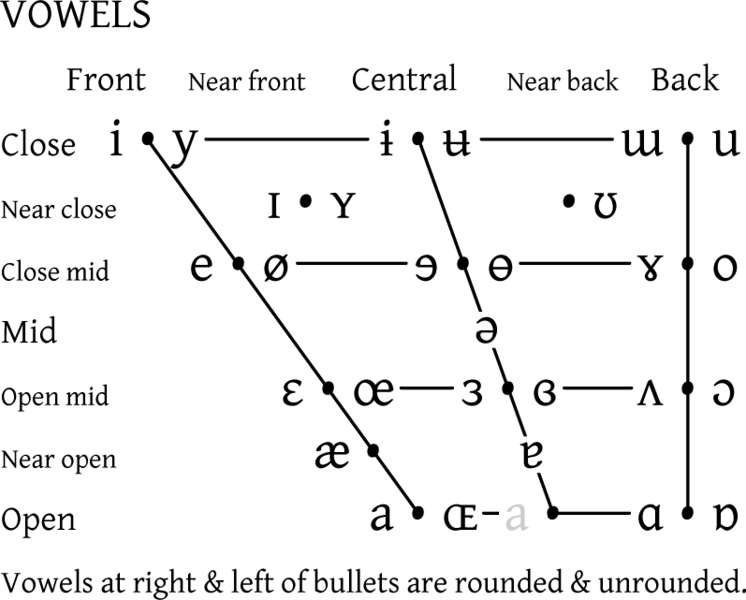
The International Phonetic Alphabet (IPA): Why We Use IPA Charts During Accent Modification Training

Image of IPA vowel chart - accent instructionWhen an accent modification student first sees the International Phonetic Alphabet (IPA) charts their eyes somewhat glaze over…they do have a pretty sterile, oddball look to them, I acknowledge that. Hmmm…are they really necessary for the learning process? I suggest, yes, they are really necessary. I refer to these charts frequently during lessons. I roll them out starting in the very first lesson, after the assessment. I teach the students the lay of the land of those charts – both vowel and consonant charts – and students relate to them, with increasing curiosity and ownership of their learning. It really does help.

The symbols are the merest bit unusual, but it always heartens me when a student starts warming up to the process, and voluntarily learns the symbols that are key to their individual accent modification. In studying together, the charts become a focal point for movement between and among sounds. A goal, an adventure, an effort supported by the documented reality called “pronunciation.” It seems to offer students the support of knowing they are not alone in this learning process, this strenuous effort for change. 

I look forward to meeting with you, the student, or with your family member, friend, neighbor, or colleague, who is making the effort to modify their accent. Looking together at this system, these charts, these tools of reference and learning. 

© 2025 Helen Kobek and helenkobek.com. All rights reserved.

Accent Modification: Your Brain Takes Up the Cause for You!

brain-5It happens with movie stars’ names, and it happens with the accent modification process. Okay, let’s start with the movie star: You’re trying to think of the name of a famous actress in a movie you just saw. You’re thinking, “She played the main character, she’s famous, in lots of movies, big smile…good grief… I can’t believe I can’t remember her name…” You think about it actively for about ten minutes, and then, frustrated, you give up, thinking, “Oh, well. It’ll come to me.” AND YOU’RE RIGHT! It WILL come to you! YOUR BRAIN DOESN’T GIVE UP!!! Your brain, frankly, doesn’t like ambiguity one bit.
At an odd time, OUT OF THE BLUE, like at 2 o’clock in the morning, or the next day while you’re having a lively conversation with someone about, say, the best fertilizer. And you shout, “JULIA ROBERTS! IT’S JULIA ROBERTS! Oh yay!” And you know, quite profoundly, that YOUR BRAIN NEVER GAVE UP ON THE PROCESS OF FIGURING IT OUT FOR YOU. Sure, the person you’re talking with about fertilizer won’t have a clue what Julia Roberts has to do with fertilizer, but, once you explain what just came to you, they’ll recognize the phenomenon. We all recognize the phenomenon: The brain takes up the cause.

That’s how accent modification works. The brain KEEPS working at the issue even when you’re not doing it actively. Once the brain knows what it needs to work on, it does it. It works between lessons. It works nights and weekends. It works while you are thinking about other things. The brain likes to makes things clear, so when you have decided to work on your accent, and we assess and go towards new sounds, the brain TAKES UP THE CAUSE.

Sometimes we will be working on a specific speech context (say, “r” in a consonant blend) and I notice something else that we needn’t focus on, but is important for you to get to work on. I’ll commonly say, “I’d like us to give this to your brain to work on. Don’t worry about.” And I explain what I think the brain would do well to take up the cause on, and your brain goes off and does it. It’s kind of like multi-tasking, but more truly brilliant. And next lesson, the student comes in, having made progress on that matter, without consciously working on it!

It’s a wonderful thing, really. And it’s based on real neurobiology, and on good, ongoing, repeated assessing of your speech, along with focused, clear, creative teaching, and an interactive learning process. Working together, all three of us: You, me, and your magnificent, active, lively brain.

I look forward to helping your brain take up your cause: being understood all the time!

© 2025 Helen Kobek and helenkobek.com. All rights reserved.

English Pronunciation Assessment: How it Works

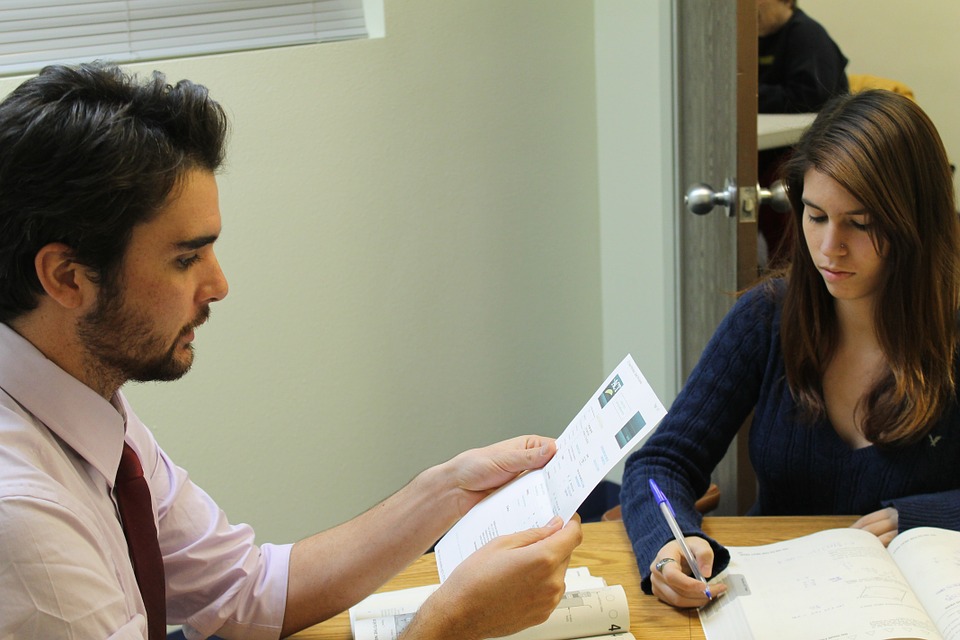
tutor-606091_960_720So here we are, together for our first accent modification lesson. Yes, we’ve talked over the phone, but now we’re sitting together on Zoom, pens in hand, paper in front of us. Now what?

We’ll be talking, and I’ll be listening very closely, taking lots of notes, which you’ll be welcome to see either while I’m writing or after, but I’ll be explaining everything once the assessment is done. The questions I ask will be open-ended to encourage you to talk! I’ll be asking you to repeat things you’ve said so I can fully “get” what you’re saying and, more importantly, how you’re saying it: What is your tongue doing? How much voice are you adding? I’ll be asking questions that will elicit a broad variety of speech sounds so I can get a comprehensive idea of where you are now and where we need to go with lessons. I will likely ask you the same questions repeatedly, if I’m trying to be sure I hear how you’re saying something. I’m not listening to the content of what you are saying, so please not to take offense if I later do not remember something important you shared with me! It’s nothing personal! I’m just in “assessment/hearing” mode.

One thing I’ll be doing while we’re talking is preparing a set of priority phonemes (speech sounds that can change the meaning of a word) for you to modify. This list will likely be a mix of consonants and vowels (including diphthongs), and will be personalized to your speech patterns – not just based on what your native language is. The length of that priority set will depend on how much change you wish to make: Do you want to be understood all the time? Or are you planning to eliminate your “foreign”  accent entirely? It’s a good idea for you to consider this matter before our first meeting, but, of course, you can change your mind at any point along the way after we start lessons. In fact, students fairly frequently do come into training thinking they want to eliminate their accents, and then decide to work towards being understood all the time, and vise versa.

And that’s how it works! A comprehensive conversation, lots of questions and repetition. And then the first, model lesson, right after the assessment, during our first meeting. So you can get a sense of how I teach, I can get a sense of how you learn, and then we see where we go from there. I look forward to meeting with you!

© 2025 Helen Kobek and helenkobek.com. All rights reserved.